November 17, 2026
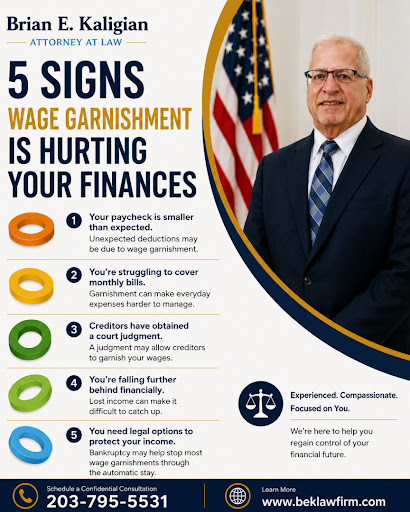
Five signs wage garnishment may be putting your finances at risk:
Many people in Milford, Stratford, West Haven, and nearby towns don’t realize how much garnishment is costing them until the damage adds up. Warning signs include:
• Your paycheck feels smaller while bills pile up
• You’re using credit cards for groceries or gas
• You’re behind on rent, utilities, or car payments
• Collection calls and letters continue
• You feel stuck with no clear way out
If these sound familiar, it may be time to learn about your legal options. Bankruptcy generally triggers an automatic stay, which may pause most wage garnishments and collection activity. A Connecticut bankruptcy attorney can explain whether Chapter 7 or Chapter 13 may fit your situation and how state exemptions could protect your income and property.
Attorney Brian E. Kaligian helps Milford-area residents understand their options. A bankruptcy consultation can provide clarity before financial pressure increases.
This is general information, not legal advice. Consult a qualified attorney about your situation.
Contact Brian E. Kaligian Attorney at Law to explore how to stop wage garnishment in Connecticut.
View Post
November 17, 2026
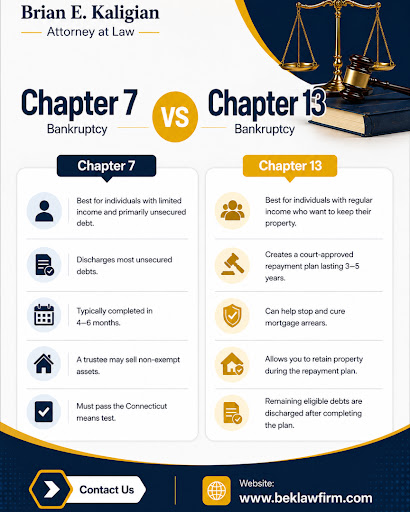
Chapter 7 or Chapter 13? Understanding the difference can help you make a smarter financial decision.
As the holiday season approaches, many Milford-area residents consider a fresh financial start. Both chapters offer debt relief, but they work differently.
Chapter 7 bankruptcy may discharge many unsecured debts, such as credit cards and medical bills, within months. Connecticut exemptions may protect much of your property. A Chapter 7 attorney in Milford, CT can assess whether you qualify under the means test.
Chapter 13 involves a three- to five-year repayment plan. It may help you catch up on missed mortgage or car payments while keeping your property. A Chapter 13 attorney can explain how a plan may fit your income.
📌 Chapter 7: faster discharge; income limits apply
📌 Chapter 13: structured repayment; may protect secured assets
📌 Both: an automatic stay generally pauses collections, garnishment, and foreclosure
The right option depends on your income, debts, and goals. Residents of Milford, Stratford, and Shelton should review both choices with a Connecticut bankruptcy attorney.
This is general information, not legal advice. Consult a qualified attorney about your situation.
Contact Brian E. Kaligian Attorney at Law to schedule a bankruptcy consultation in Milford, CT.
View Post
November 14, 2026
Missing mortgage payments can feel overwhelming, but you may have options.
As the year ends, many Connecticut homeowners realize they have fallen behind. If you received a foreclosure notice or notice of default, act early. Connecticut is a judicial foreclosure state, so the process goes through the courts and you have opportunities to respond.
Bankruptcy triggers an automatic stay that generally pauses foreclosure proceedings. Chapter 13 may help you catch up on missed payments over time while keeping your home. Chapter 7 may relieve other debts and free up income.
✔ Don’t ignore court or lender notices
✔ Learn whether Connecticut exemptions protect your home equity
✔ Consult a foreclosure attorney before a sale date is scheduled
A Connecticut foreclosure attorney can review your mortgage, debts, and goals to explain your options. Homeowners in Milford, Orange, West Haven, and throughout New Haven County may benefit from an early consultation.
This is general information, not legal advice. Consult a qualified attorney about your situation.
Contact Brian E. Kaligian Attorney at Law for a bankruptcy consultation in Milford, CT.
View Post